
Small doesn’t have to mean cramped. A few smart choices in color, furniture, and layout can make a compact apartment or starter home feel open, current, and genuinely liveable. The worldwide home decor market is projected to reach $128.6 billion in 2026, growing at roughly 2.5% a year — a sign that more households than ever are investing in getting their interiors right, including in smaller footprints.
This guide walks through what modern decor actually means, how to plan a small room properly, and the specific furniture, storage, color, and lighting choices that make compact spaces look larger and live better.
Key Takeaways
- Neutral, light color palettes and mirrors are two of the simplest ways to visually expand a small room.
- Multi-functional and foldable furniture (storage beds, nesting tables, wall-mounted desks) do double duty in tight square footage.
- In 2025, half of all home plans sold measured between 1,000 and 1,999 square feet, and only 10% fell below 1,000 square feet — a sign that “smaller but smarter” is the design direction to plan for.
- Vertical storage and hidden storage solutions matter more than extra furniture in a small footprint.
- Overcrowding and poor lighting are the two most common mistakes that make small rooms feel even smaller.
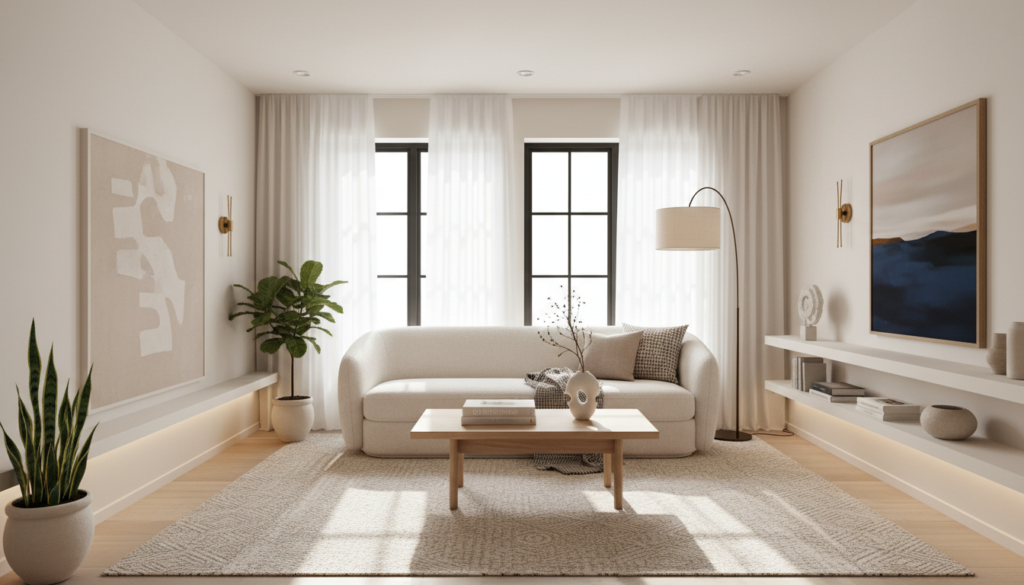
What Defines Modern Home Decor?
Modern home decor is built around clean lines, uncluttered surfaces, and a restrained material palette — think wood, metal, and glass rather than heavy ornamentation. It’s different from “contemporary” design, which shifts with current trends; modern decor traces back to a specific mid-20th-century aesthetic that still favors function over decoration.
For a small space, this distinction matters practically. Modern design’s preference for open floor plans, simple silhouettes, and a cohesive color palette naturally reduces visual clutter — which is exactly what makes a compact room feel bigger. Choosing two or three core colors and repeating them through furniture, walls, and textiles keeps the eye moving smoothly instead of snagging on competing patterns.
Modern vs. Contemporary Design
Modern decor leans on natural materials, geometric forms, and a fixed set of design principles from the 1920s–1960s. Contemporary decor borrows from whatever is current — it might mix mid-century shapes with an of-the-moment color like moody blue. For small spaces, modern’s timelessness is an advantage: it ages well, so you’re not re-decorating every few years to keep up with trends.

Planning Your Small Space
Before buying anything, measure the room precisely — length, width, ceiling height, and the location of outlets, windows, and doors. This single step prevents the most common (and expensive) small-space mistake: furniture that’s a few inches too big for the room it’s meant to serve.
From there, set specific goals. Is this room primarily for sleeping, working, entertaining, or all three? Small spaces rarely tolerate “maybe” purposes — a room trying to be everything usually ends up serving nothing well. Sketch a simple functional layout with clear zones (sleep, work, storage) before you shop, so every piece you buy has an assigned job.
Best Color Schemes for Small Spaces
Color does more visual heavy lifting in a small room than almost any other decision.
- Neutral tones — warm whites, greiges, and soft taupes reflect available light and avoid the “boxed-in” feeling darker colors can create.
- White and light colors — still the most reliable way to make ceilings feel higher and walls feel farther apart.
- Accent colors — a single saturated color, used sparingly (a chair, a rug, one wall), adds personality without shrinking the room visually.
- Monochromatic interiors — varying tones of one color, rather than high-contrast combinations, keep sightlines uninterrupted.
Interestingly, designers are also leaning into bold “color-drenching” — saturating a small room, including the ceiling, in one rich tone to create a cocooned, immersive effect rather than always defaulting to white. It’s a reminder that “make it feel bigger” and “make it feel good” aren’t always the same goal, and modern small-space decor increasingly makes room for both.

Space-Saving Furniture Ideas
Furniture that serves two purposes is the single highest-leverage decor decision for a small space.
- Multi-functional furniture — ottomans with storage, sofa beds, and coffee tables that lift into desks.
- Foldable furniture — drop-leaf tables and folding chairs that disappear when not in use.
- Storage beds — a platform bed with drawers underneath can replace an entire dresser.
- Nesting tables — a set that separates for guests and tucks together the rest of the time.
- Wall-mounted desks — fold flat against the wall, reclaiming floor space instantly.
This isn’t a niche preference. Rising home office use is directly increasing demand for space-saving furniture, and modular designs are gaining favor specifically in apartments and smaller homes, according to recent market analysis. Furniture that adapts to more than one function is no longer just a small-space workaround — it’s becoming mainstream.
Smart Storage Solutions
Storage, more than square footage, determines whether a small space feels calm or chaotic.
- Vertical storage — tall, narrow shelving uses wall height instead of floor footprint.
- Floating shelves — display and storage without a bulky cabinet base.
- Hidden storage — ottomans, benches, and stair-step drawers keep items out of sight.
- Built-in cabinetry — custom joinery that fits awkward corners exactly, rather than leaving gaps.
- Under-bed storage — bins or drawers that use otherwise-wasted space.
Designers are explicit about this shift. One founder notes that the move is “away from overly-filled rooms and towards edited schemes that make the space feel generous,” with built-in joinery used to make the most of every awkward corner. In other words: fewer standalone furniture pieces, more storage that’s designed into the architecture itself.
Modern Living Room Decor Ideas
A modern small living room works best with a minimal furniture count — one sofa, one or two chairs, one coffee table — arranged to leave a clear walking path. Add:
- Statement lighting — one striking fixture can replace the visual weight of extra furniture.
- Area rugs — anchor the seating area and define the “room” within an open floor plan.
- Decorative cushions — two or three, in a shared color family, rather than a large mismatched pile.
- Wall art — one larger piece reads as more sophisticated than several small ones.
Small Bedroom Decorating Ideas
A minimalist bedroom design — a platform bed, one nightstand, simple bedding in one or two tones — keeps a small room from feeling crowded the moment you wake up. Pair it with:
- Compact wardrobes — slim-depth or sliding-door units instead of swing-door closets.
- Bedside storage — a floating shelf or slim drawer unit instead of a full nightstand.
- Mirrors for visual space — placed opposite a window, a mirror doubles natural light and depth.
Kitchen Decor Ideas
Small kitchens benefit from open shelving, which feels lighter than upper cabinets and keeps everyday items within reach. Compact dining solutions — a drop-leaf table or a two-seat banquette — handle daily meals without demanding a dedicated dining room. Inside cabinets, simple organizers (risers, dividers, pull-out bins) make a small footprint function like a much bigger kitchen. Modern lighting, especially under-cabinet LEDs, adds brightness exactly where prep work happens.

Bathroom Decor Ideas
Floating vanities visually open up the floor, since you can see the tile continue underneath. Glass shower doors, rather than curtains or frosted panels, let sightlines travel the full length of the room. Storage baskets keep towels and toiletries organized without adding cabinetry, and minimal accessories — one or two, not a dozen — keep countertops clear.
Lighting Tips for Small Homes
Natural light should always come first: keep window treatments minimal or sheer, and avoid blocking light paths with furniture. From there, layer in:
- LED lighting — bright, energy-efficient, and available in warm tones that suit modern interiors.
- Layered lighting — a mix of ambient, task, and accent light rather than one overhead fixture doing all the work.
- Pendant lights — free up surface space that a table lamp would otherwise occupy.
Decorative Accessories
A few well-chosen accessories go further in a small space than many small ones. Indoor plants add life and soften hard lines. Mirrors expand light and depth. Artwork, especially a single larger piece, adds personality without visual noise. Decorative trays corral small items so surfaces stay organized rather than cluttered, and textiles — one or two throws or cushions — add warmth without competing patterns.

Common Decorating Mistakes
- Overcrowding — too much furniture is the single fastest way to shrink a room visually.
- Dark color overuse — a few accents are fine; wall-to-wall dark tones without enough light can feel oppressive in a genuinely small footprint.
- Poor lighting — one overhead fixture rarely lights a room properly.
- Ignoring storage — without a plan for where things live, even a beautifully decorated room fills up with visible clutter within weeks.
Budget-Friendly Modern Home Decor Tips
You don’t need a large budget to get a modern small-space look. DIY projects — a fresh coat of paint, reupholstering a single chair, building simple floating shelves — cost a fraction of buying new. Affordable furniture retailers now offer modern silhouettes at accessible price points, and repurposing furniture you already own (sanding, painting, or adding new hardware) keeps pieces out of landfills while updating their look. Finally, shopping seasonal sales for big-ticket items like sofas or beds can meaningfully cut the cost of a full room refresh.
Frequently Asked Questions
What are the best modern home decor ideas for small spaces?
Prioritize a light, cohesive color palette, multi-functional furniture, and vertical or hidden storage. These three choices address the core challenge of small spaces — limited floor area — more effectively than any single decorative trend.
How can I make a small room look bigger?
Use light, reflective colors, position a mirror to bounce natural light, keep furniture count minimal, and choose pieces with visible legs rather than skirted bases, which let light travel under and around them.
Which colors make small spaces appear larger?
Neutral, light tones — soft whites, warm greiges, pale taupes — generally make rooms feel larger by reflecting available light. A cohesive, low-contrast palette also helps, since it reduces the visual “stops” that make a room feel busy and smaller.
What furniture is best for compact homes?
Multi-functional pieces are best: storage beds, nesting tables, foldable chairs, and wall-mounted desks all reduce the total furniture footprint while keeping full functionality. Modular designs in particular are gaining favor in apartments and smaller homes as home offices become more common.
How do I decorate a small apartment on a budget?
Focus spending on one or two anchor pieces (a sofa, a bed) and handle the rest with paint, DIY shelving, and repurposed furniture. Shopping sales for big-ticket items and thrifting smaller accessories stretches a limited budget significantly further.
What is the difference between modern and contemporary home decor?
Modern decor refers to a specific design era (roughly 1920s–1960s) built on clean lines and natural materials. Contemporary decor reflects whatever is currently trending, which means it shifts over time — modern is a fixed style, contemporary is a moving target.
How can I increase storage without adding bulky furniture?
Use vertical wall space with floating shelves, built-in or custom joinery for awkward corners, and under-bed or under-bench storage. These solutions add capacity without consuming additional floor footprint.
Are minimalist interiors suitable for small homes?
Yes — minimalism and small-space living are naturally complementary, since fewer items on display means less visual clutter and easier movement through the room. A minimalist approach doesn’t require an empty or cold look; it simply means being selective about what stays visible.
What lighting works best in small living spaces?
Layered lighting — ambient, task, and accent sources working together — outperforms a single overhead fixture. Pendant lights and LED strips are especially useful since they don’t consume surface space the way table lamps do.
What are the biggest mistakes to avoid when decorating small spaces?
Overcrowding with too much furniture, relying on a single light source, using too many dark tones without enough natural light, and failing to plan for storage before decorating are the most common and most correctable mistakes.
Conclusion
Modern decor and small-space living solve the same problem from two directions: less clutter, more intention. A light, cohesive palette, furniture that does double duty, and storage built into the architecture rather than bolted on afterward are the three moves that matter most. Start with an honest measurement of your room and a clear goal for each zone, then layer in color, furniture, and lighting in that order — and a small space starts reading as a well-planned one, not a compromised one.