
A sloped backyard often feels like wasted space, but with the right retaining wall design, it can become one of the most attractive areas of your home. Instead of struggling with soil erosion, uneven ground, and difficult landscaping, homeowners can transform hillsides into beautiful outdoor living spaces that add both functionality and value. A professionally designed retaining wall creates level areas for patios, gardens, fire pits, outdoor kitchens, and children’s play areas while protecting your property from water damage.
Today’s landscaping trends focus on combining practicality with modern aesthetics. Homeowners no longer build retaining walls simply to hold back soil. Instead, they incorporate natural stone, decorative concrete, LED lighting, built-in seating, waterfalls, and lush gardens to create luxury outdoor environments. Whether your backyard has a gentle slope or a steep hillside, there are countless design possibilities that fit every budget and architectural style.
In this comprehensive guide, you’ll discover the best retaining wall ideas for sloped backyard projects, learn how to choose the right materials, understand installation costs, and explore expert design tips that will help you create a backyard you’ll enjoy for years.
Your Kind Info: 27 Patio Landscaping Ideas to Transform Your Outdoor Space
Why Retaining Walls Are Essential
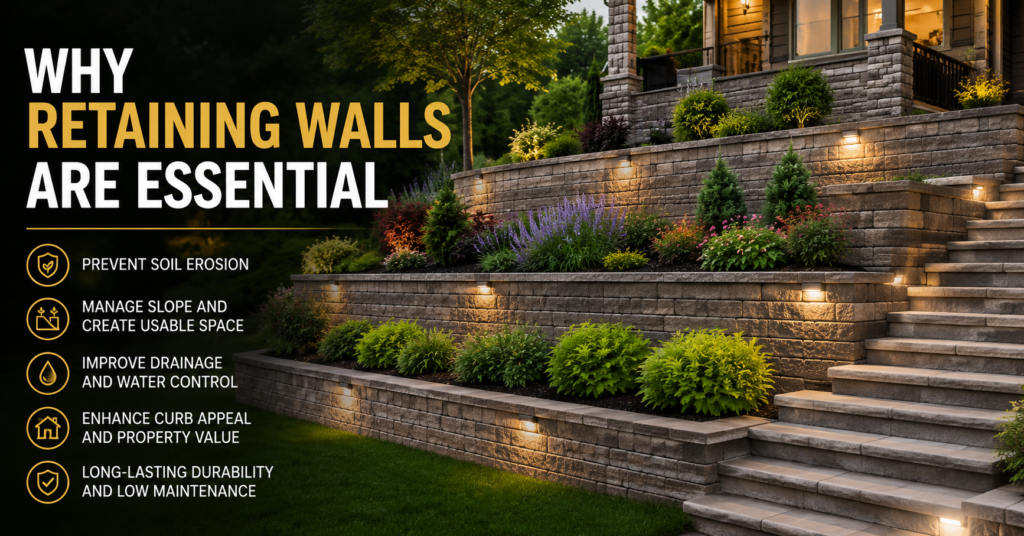
A retaining wall is much more than a decorative landscape feature. Its primary purpose is to stabilize soil and prevent erosion, especially on properties with uneven terrain. Heavy rain can wash away valuable topsoil, create muddy areas, and even threaten your home’s foundation if slopes aren’t properly managed.
Retaining walls distribute soil pressure while allowing water to drain safely through engineered drainage systems. This reduces hydrostatic pressure, which is one of the leading causes of wall failure. Modern retaining walls are designed to withstand thousands of pounds of soil pressure while blending seamlessly into the landscape.
Besides structural support, retaining walls significantly improve usability. Imagine turning an unusable hillside into multiple terraces filled with gardens, seating areas, grilling stations, or outdoor dining spaces. Instead of fighting against nature, you’re working with it to maximize every square foot of your property.
Perhaps one of the biggest advantages is increased property value. Landscaping experts consistently rank professionally designed outdoor living spaces among the top home improvements for return on investment. A beautiful retaining wall creates strong curb appeal and gives buyers confidence that drainage and erosion problems have been professionally addressed.
Functional Benefits
Retaining walls provide numerous practical benefits beyond simply holding soil in place. They help prevent flooding by directing rainwater toward proper drainage systems. This reduces standing water that can damage grass, plants, patios, and building foundations.
Another significant advantage is improved accessibility. Multi-level retaining walls make steep slopes easier to navigate by incorporating staircases and level walking paths. Families with children or elderly members particularly benefit from safer outdoor spaces that are easier to maintain.
Retaining walls also create microclimates for gardening. Raised planting beds warm faster in spring, drain better than flat gardens, and allow homeowners to grow flowers, vegetables, shrubs, and ornamental trees more successfully.
Finally, retaining walls reduce long-term maintenance costs. Instead of constantly repairing erosion damage or reseeding washed-out lawns, homeowners enjoy stable landscaping that requires less ongoing work.
Your Kind Info: How to Build a Skincare Routine: A Complete Beginner’s Guide
Visual Appeal
Modern retaining walls have become major architectural features rather than hidden structural elements. Homeowners increasingly use premium materials like natural limestone, granite, stacked slate, and textured concrete blocks to create luxurious outdoor environments.
Curved retaining walls soften hard landscapes and create elegant transitions between terraces. Mixed materials, such as combining wood with natural stone or steel accents with concrete, add visual interest while complementing contemporary homes.
Integrated lighting dramatically enhances nighttime appearance. LED strip lights beneath retaining wall caps illuminate pathways, highlight gardens, and create a resort-style atmosphere. Some homeowners even install color-changing smart lighting for entertaining guests.
Water features are another growing trend. Cascading waterfalls flowing over retaining walls produce relaxing sounds while becoming stunning focal points that increase the overall appeal of outdoor spaces.
Planning Your Retaining Wall Project
Before construction begins, careful planning determines whether your retaining wall performs successfully for decades or develops costly problems within a few years. Every backyard is different, so understanding your property’s slope, drainage patterns, and soil conditions is essential.
The first step is evaluating the steepness of the slope. Gentle slopes may only require short decorative walls, while steep hillsides often need engineered multi-level terraces. Large retaining walls over four feet tall frequently require engineering approval and building permits depending on local regulations.
Drainage is equally important. Water trapped behind a retaining wall creates hydrostatic pressure that can eventually push walls outward or cause structural failure. Professional installations typically include perforated drain pipes, gravel backfill, drainage fabric, and strategically placed weep holes to safely remove excess moisture.
Homeowners should also think about the future use of the space. Will the terraces support patios, outdoor kitchens, vegetable gardens, swimming pools, or playgrounds? Designing around future needs helps avoid expensive modifications later.
Budget planning should include excavation, drainage materials, wall construction, landscaping, lighting, permits, and labor. While premium materials increase initial costs, they often provide greater durability and lower maintenance over time.

Assessing the Slope
Understanding the terrain is one of the most important parts of any retaining wall project. The slope angle affects everything from wall height and foundation requirements to drainage design and material selection. A slight incline may only need a single retaining wall, while a steep backyard often benefits from multiple terraces that distribute soil pressure more effectively.
Professional landscape designers commonly recommend creating several shorter retaining walls instead of one very tall wall. This approach not only improves stability but also creates attractive planting areas between levels. Terraced landscapes feel more spacious, offer better drainage, and provide additional opportunities for outdoor living features.
Surveying the property also identifies existing utilities, tree roots, underground drainage lines, and potential obstacles that could affect construction. Addressing these factors early prevents costly surprises during excavation.
Your Kind Info: Affordable Home Decor Ideas on a Budget
Drainage and Soil Considerations
Even the strongest retaining wall can fail without proper drainage. Clay-heavy soils retain more water than sandy soils, increasing pressure behind the wall after heavy rainfall. That’s why drainage systems are considered just as important as the wall itself.
A typical drainage system includes crushed stone backfill, perforated drain pipes, landscape fabric, and outlets that safely direct water away from the structure. Together, these components reduce hydrostatic pressure and extend the wall’s lifespan.
Soil testing may also reveal whether additional reinforcement is necessary. Weak or unstable soils sometimes require geogrid reinforcement or deeper foundations to support heavier retaining wall systems.
Best Materials for Retaining Walls
Choosing the right material is one of the biggest decisions you’ll make when building a retaining wall. The material affects not only the appearance of your backyard but also the wall’s strength, lifespan, maintenance requirements, and overall cost. Some homeowners prioritize natural beauty, while others focus on affordability or long-term durability. Fortunately, today’s market offers a wide range of options suitable for nearly every landscape design and budget.
When selecting materials, consider factors such as your local climate, soil type, drainage conditions, and the height of the wall. Materials that perform exceptionally well in one region may not be the best choice in another. For example, timber walls work beautifully in dry climates but may deteriorate faster in consistently wet environments. Stone and concrete, on the other hand, provide decades of durability with minimal maintenance.
Another important consideration is how the retaining wall complements your home’s architectural style. A rustic farmhouse pairs beautifully with natural stone or timber, while a contemporary home often looks best with smooth concrete blocks, steel accents, or minimalist gabion walls. Matching materials throughout your landscape creates a cohesive design that significantly enhances curb appeal.

Natural Stone Retaining Walls
Natural stone remains one of the most desirable retaining wall materials because of its timeless appearance and unmatched durability. Every stone has unique textures, colors, and shapes, allowing homeowners to create one-of-a-kind landscapes that blend naturally with their surroundings. Popular choices include limestone, sandstone, granite, fieldstone, and slate.
Stone retaining walls can last well over 100 years when properly installed. They resist harsh weather conditions, require little maintenance, and actually become more attractive as they age. Moss, climbing plants, and surrounding vegetation often enhance their natural character rather than detract from it.
Although natural stone typically costs more than other materials, many homeowners consider it a worthwhile investment due to its premium appearance and long lifespan. Dry-stack stone walls create a rustic aesthetic, while mortared stone walls provide a more formal and polished look. Either option instantly elevates the overall landscape design.
Your Kind Info: The Ultimate Skincare Routine for Sensitive Skin
Concrete Block Retaining Walls
Concrete retaining wall blocks have become the most popular option for residential landscaping because they offer an excellent balance between cost, strength, and aesthetics. Modern blocks come in dozens of textures and colors that closely resemble natural stone while remaining easier and faster to install.
Interlocking concrete block systems are specifically engineered to withstand heavy soil pressure. Many products include built-in locking mechanisms that increase stability without requiring mortar. This makes them ideal for both DIY enthusiasts and professional contractors.
Concrete blocks also provide tremendous design flexibility. Homeowners can create straight walls, gentle curves, multi-level terraces, raised flower beds, outdoor kitchens, or seating walls using the same material. Decorative caps complete the design while protecting the wall from water infiltration.
With proper installation and drainage, concrete retaining walls commonly last 50 to 100 years. They require only occasional cleaning and minimal repairs, making them one of the best long-term investments for sloped backyards.
Timber Retaining Walls
Timber retaining walls offer a warm, natural appearance that complements cottage gardens, cabins, and rustic landscapes. Pressure-treated lumber is the most common material because it resists insects, moisture, and decay better than untreated wood.
One of timber’s biggest advantages is affordability. Installation costs are generally lower than natural stone or concrete, making timber an attractive choice for homeowners working within a limited budget. Timber walls also blend beautifully with trees, shrubs, and woodland settings.
However, timber does have limitations. Even pressure-treated wood eventually deteriorates due to constant soil moisture and changing weather conditions. Depending on the climate and maintenance, timber retaining walls typically last between 15 and 30 years before requiring replacement.
Regular inspections help identify signs of rot, insect damage, or shifting early enough to prevent larger structural problems. Applying wood preservatives and ensuring proper drainage significantly extends the lifespan of timber retaining walls.
Gabion Retaining Walls
Gabion walls have become increasingly popular in contemporary landscape design. These walls consist of heavy-duty galvanized steel wire baskets filled with rocks, recycled concrete, or decorative stone. Originally developed for civil engineering projects, gabions are now widely used in residential landscaping because of their industrial yet stylish appearance.
One major advantage of gabion walls is exceptional drainage. Since water easily flows through the stone-filled cages, hydrostatic pressure is dramatically reduced. This natural drainage makes gabions particularly suitable for areas experiencing heavy rainfall.
Gabion walls are also environmentally friendly. Many homeowners fill the baskets with locally sourced stones or recycled construction materials, reducing transportation costs and environmental impact. Their bold appearance pairs especially well with modern homes featuring steel, concrete, and minimalist architectural elements.
Your Kind Info: Best Skincare Routine for Dry Skin: Complete Guide for Healthy, Hydrated Skin
10 Stunning Retaining Wall Ideas
1. Multi-Level Terraced Gardens
Terracing is one of the most effective ways to transform a steep backyard into functional outdoor living space. Instead of fighting the natural slope, terraces work with it by creating multiple flat levels connected by attractive staircases.
Each terrace can serve a different purpose. One level may become a vegetable garden, another an outdoor dining area, while a third features a cozy fire pit surrounded by comfortable seating. This layered approach creates visual depth while maximizing every inch of available land.
Terraced retaining walls also reduce soil pressure because each individual wall supports less weight than one large retaining wall. This improves structural stability and often lowers construction costs.
Adding flowering plants, ornamental grasses, shrubs, and decorative lighting between terraces creates an elegant resort-style landscape that remains beautiful throughout the year.
2. Curved Natural Stone Walls
Straight retaining walls are practical, but curved walls introduce movement and softness into the landscape. Curved designs naturally guide visitors through the yard while creating a more organic appearance.
Natural stone is particularly well suited for curved retaining walls because its irregular shapes blend seamlessly around bends. These walls often become stunning focal points that complement winding garden paths, ponds, or outdoor seating areas.
Curved walls also distribute structural loads differently than straight walls, sometimes providing improved stability on challenging terrain. Their flowing appearance helps landscapes feel larger and more inviting.
When combined with colorful perennials and low-voltage lighting, curved stone walls create breathtaking evening landscapes perfect for entertaining family and friends.
3. Modern Concrete Retaining Walls
Contemporary homes often benefit from clean, minimalist retaining wall designs. Smooth architectural concrete, textured concrete blocks, and geometric layouts create sleek outdoor spaces that emphasize simplicity and functionality.
Modern retaining walls frequently incorporate built-in lighting, floating benches, steel planters, and linear water features. The result is a sophisticated outdoor environment resembling luxury hotel landscapes.
Large-format concrete panels are another growing trend. Their seamless appearance reduces visual clutter while making smaller backyards feel more spacious.
Gray remains the most popular color, but charcoal, white, beige, and textured finishes provide additional design flexibility for modern outdoor living spaces.
4. Raised Garden Bed Retaining Walls
Combining retaining walls with raised garden beds is an excellent way to maximize space while adding vibrant color to sloped landscapes. Raised planting areas improve soil quality, drainage, and accessibility for gardeners.
Vegetables, herbs, flowers, ornamental shrubs, and even dwarf fruit trees thrive in raised beds because gardeners can control soil composition more effectively than in native ground.
Layering plants at different heights also creates beautiful visual interest throughout the year. Evergreen shrubs provide winter structure, while flowering perennials deliver seasonal color from spring through autumn.
Many homeowners use retaining walls to separate edible gardens from entertainment areas, creating functional outdoor spaces that remain visually appealing.
5. Built-In Seating Walls
One of the smartest ways to increase functionality is incorporating seating directly into retaining walls. Wide wall caps made from natural stone or precast concrete create durable benches without requiring additional outdoor furniture.
Built-in seating is ideal around patios, fire pits, outdoor kitchens, or children’s play areas. Guests always have convenient seating available without cluttering the landscape.
Adding weather-resistant cushions makes seating walls even more comfortable while maintaining their clean architectural appearance.
This design not only saves space but also reduces landscaping costs by combining two features into one attractive structure.
Retaining Wall Cost Comparison
| Material | Average Cost per sq. ft. | Lifespan | Maintenance | Best For |
|---|---|---|---|---|
| Timber | $15–$30 | 15–30 Years | Medium | Budget Projects |
| Concrete Block | $25–$50 | 50–100 Years | Low | Residential Landscapes |
| Natural Stone | $40–$80 | 75–100+ Years | Very Low | Luxury Homes |
| Gabion | $30–$60 | 50+ Years | Low | Modern Landscapes |
6. Incorporate a Water Feature
A retaining wall doesn’t have to be a static structure. By integrating a waterfall or cascading water feature, you can transform it into the focal point of your backyard. Water flowing over natural stone or textured concrete creates a calming atmosphere while masking neighborhood noise. Whether it’s a small spillway or a dramatic multi-tiered waterfall, adding water instantly elevates the look and feel of your landscape.
Many homeowners pair water features with LED lighting to create a stunning nighttime display. The reflection of moving water combined with warm lighting creates a luxurious resort-style ambiance that is perfect for entertaining guests or relaxing after a long day. If you enjoy wildlife, a pond at the base of the waterfall can also attract birds and butterflies, making your backyard even more vibrant.
Keep in mind that water features require proper waterproofing and a recirculating pump. Routine maintenance, such as cleaning filters and checking water levels, ensures smooth operation. Although they add to the project cost, the visual impact and peaceful environment they create make them a worthwhile investment for many homeowners.
7. Install LED Lighting Along the Wall
Lighting can completely transform a retaining wall after sunset. Instead of disappearing into the darkness, a well-lit wall becomes a striking design feature that enhances safety and aesthetics. Recessed LED lights, under-cap lighting, and pathway fixtures are among the most popular choices because they consume very little electricity while providing long-lasting illumination.
Strategically placed lighting highlights the wall’s texture, surrounding plants, and architectural details. It also improves visibility on staircases and walkways, reducing the risk of accidents. Smart lighting systems allow homeowners to control brightness, color, and schedules directly from a smartphone, making outdoor spaces more convenient and energy efficient.
Warm white lighting creates a welcoming atmosphere, while color-changing LEDs can be used during holidays or outdoor parties. Solar-powered lights are another excellent option for homeowners looking to reduce energy costs without sacrificing style. Regardless of the lighting system you choose, it adds elegance and extends the usability of your backyard well into the evening.
8. Mix Different Materials
Combining materials is one of the biggest landscaping trends in 2026. Instead of building an entire wall from one material, designers mix natural stone, concrete blocks, timber, steel, and decorative gravel to create visually interesting landscapes. This layered approach adds texture and depth while allowing homeowners to personalize their outdoor space.
For example, a concrete retaining wall with natural stone caps offers a clean modern look with a touch of warmth. Gabion baskets can be paired with timber seating, while steel edging complements contemporary gardens. Mixing materials also allows homeowners to allocate their budget strategically, using premium materials only where they have the greatest visual impact.
Consistency is key when combining materials. Repeating similar colors or textures throughout the landscape helps maintain a cohesive appearance rather than creating visual clutter. Thoughtful combinations often result in custom designs that feel both luxurious and timeless.
9. Create a Boulder Retaining Wall
If your goal is to achieve a natural landscape, few options compare to large boulder retaining walls. Massive stones blend effortlessly into wooded areas, mountain properties, and rural landscapes. Their irregular shapes create a rugged appearance that looks as though it has always been part of the environment.
Boulder walls are incredibly durable because of the sheer weight of the rocks. They require minimal maintenance and can withstand decades of weather exposure without losing their structural integrity. Native plants, ornamental grasses, and creeping groundcovers growing between the rocks further enhance the natural aesthetic.
Although installation requires heavy machinery and experienced operators, the finished result is both functional and breathtaking. Boulder retaining walls are particularly effective for steep slopes where homeowners want a less formal appearance than concrete or block walls.
10. Integrate Staircases with Retaining Walls
A staircase built into a retaining wall improves both accessibility and visual appeal. Instead of navigating a steep hillside, homeowners can move comfortably between different levels of the yard. Stone, concrete, or timber steps can be designed to match the retaining wall for a seamless appearance.
Wide staircases feel more inviting and create opportunities for decorative landscaping along the sides. Planters, lighting, and ornamental grasses soften the hardscape while guiding visitors through the landscape. Handrails may also be necessary on steeper staircases for added safety.
This design works particularly well in terraced backyards where multiple levels serve different functions. One terrace might feature a patio, another a garden, and another a children’s play area, all connected by elegant staircases that enhance the overall design.
Your Kind Info: Modern Home Decor Ideas for Small Spaces
DIY vs. Professional Installation
Building a retaining wall may seem like a straightforward DIY project, but the complexity depends on the wall’s height, soil conditions, and drainage requirements. Small decorative walls under three feet are often manageable for experienced DIY enthusiasts with the right tools and careful planning. However, larger structural retaining walls require engineering knowledge to ensure they safely withstand soil pressure and water drainage.
Professional contractors bring expertise in excavation, grading, foundation preparation, drainage installation, and structural reinforcement. They also understand local building codes and permit requirements, reducing the risk of costly mistakes. While hiring professionals increases the upfront investment, it often saves money in the long run by preventing structural failures and expensive repairs.
If you choose the DIY route, invest time in learning proper construction techniques and never compromise on drainage materials. A well-built retaining wall should remain stable for decades, making quality workmanship one of the most important factors in the project’s success.
Maintenance Tips
Even the strongest retaining walls benefit from regular maintenance. Inspect the wall at least twice a year, especially after heavy rainfall or freezing temperatures. Look for cracks, bulging sections, leaning walls, or signs of poor drainage. Early detection allows minor issues to be repaired before they become major structural problems.
Keep drainage outlets free of leaves, soil, and debris to ensure water flows away from the wall. Remove invasive tree roots that may push against the structure over time, and replace damaged landscape fabric or gravel if necessary. For timber walls, inspect for rot and insect damage, while stone and concrete walls may only require occasional cleaning to remove dirt and moss.
Proper landscaping also contributes to the wall’s longevity. Avoid planting large trees directly behind retaining walls because expanding root systems can increase pressure and compromise stability. Instead, choose shallow-rooted shrubs, flowers, and ornamental grasses that enhance the appearance without affecting the structure.
Conclusion
A sloped backyard doesn’t have to limit your landscaping dreams. With the right retaining wall design, even the steepest property can become a functional and beautiful outdoor retreat. From elegant natural stone terraces to sleek modern concrete walls, there are solutions for every architectural style, budget, and lifestyle.
The key to a successful project lies in careful planning, proper drainage, quality materials, and professional installation when required. By combining retaining walls with gardens, lighting, water features, seating, and staircases, homeowners can create outdoor spaces that are as practical as they are visually impressive.
Whether you’re improving curb appeal, increasing usable space, or protecting your property from erosion, investing in a well-designed retaining wall is one of the smartest landscape improvements you can make. With thoughtful planning and regular maintenance, your retaining wall can provide beauty, stability, and value for decades to come.
Frequently Asked Questions (FAQs)
1. What is the cheapest retaining wall option for a sloped backyard?
Pressure-treated timber is generally the most affordable option. However, concrete blocks often provide better long-term value because they require less maintenance and have a significantly longer lifespan.
2. How tall can a retaining wall be without engineering?
This depends on local building regulations. In many areas, retaining walls over 4 feet (1.2 meters) require engineering approval and permits. Always check local codes before starting construction.
3. Which retaining wall material lasts the longest?
Natural stone is typically the most durable material, often lasting well over 100 years with proper installation and drainage. Concrete block systems also offer excellent longevity.
4. Do retaining walls increase property value?
Yes. Professionally designed retaining walls improve curb appeal, create more usable outdoor living space, reduce erosion, and are considered a valuable landscaping investment that can increase resale value.
5. How often should a retaining wall be inspected?
Inspect your retaining wall at least twice a year and after major storms. Regular inspections help identify drainage issues, cracks, or movement before they become serious structural problems.