
The difference between a pergola and a patio comes down to one idea: one is a structure, the other is a surface. A patio is the flat, paved ground area concrete, pavers, brick, or stone where you put furniture. A pergola is an open-roof frame of posts, beams, and rafters built on top of a patio, deck, or lawn to add shade and definition. You can have either one without the other, but together they form a defined, shaded outdoor room.
Patio vs. Pergola: The Core Differences
| Patio | Pergola | |
|---|---|---|
| What it is | A flat ground surface | An overhead framed structure |
| Materials | Concrete, pavers, stone, brick | Wood, vinyl, aluminum, steel |
| Roof | None | Open, slatted, or louvered |
| Function | A level place to sit or walk | Adds shade, height, visual structure |
| Typical cost | Lower for a bare slab | Moderate for a basic build |
A patio is what you stand on; a pergola is what stands over you.
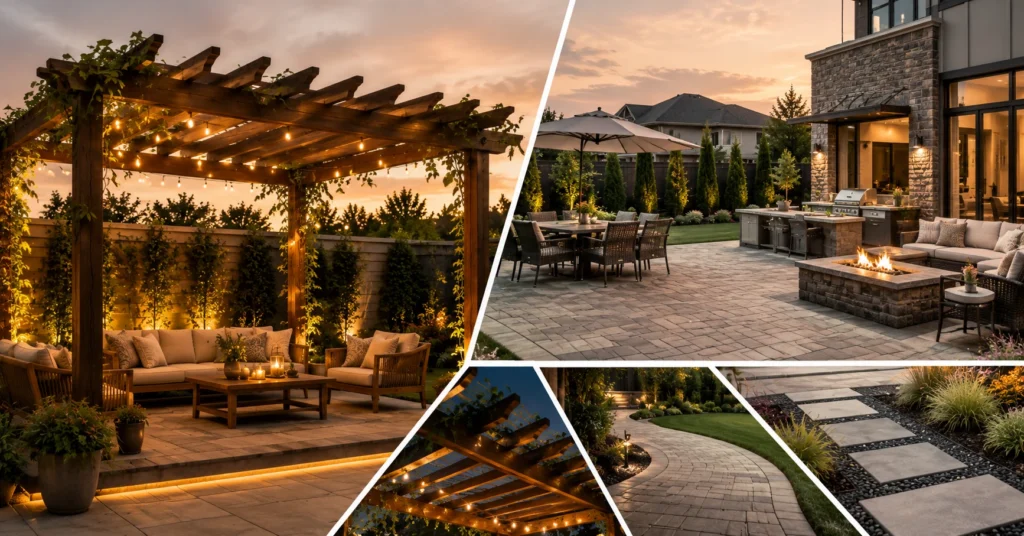
Is a Pergola Cheaper Than a Patio?
A standard open-roof pergola is generally cheaper than a solid-roof, weatherproof patio cover, since it needs fewer materials, lighter footings, and simpler framing. High-end motorized louvered pergolas are the exception their smart tech can rival or exceed a basic solid patio cover’s price. If you’re instead comparing a pergola to a bare paver or concrete slab with no roof, the bare slab alone is usually cheaper.
Difference Between a Pergola and a Patio Roof
A patio roof is solid and weatherproof, built to fully block sun and rain. A pergola keeps its roof open or slatted on purpose, trading full coverage for a lighter, airier look. Want full weather protection? Go with a patio roof. Want a framed, partially shaded accent? Choose a pergola.
Patio vs. Pergola vs. Gazebo
- Patio — the paved ground surface, no roof or walls.
- Pergola — an open-roof frame over a patio, deck, or lawn for partial shade.
- Gazebo — a freestanding structure with a solid, peaked roof and open or partly open sides, offering full overhead coverage.
The patio is the floor, the pergola is an open frame above it, and the gazebo is its own fully roofed room.
Patio vs. Verandah vs. Pergola
A patio is freestanding and unattached to the house. A verandah is a roofed, open-sided porch structurally attached to the house, usually opening onto an interior room. A pergola can be attached or freestanding, built mainly for partial shade rather than full weather coverage. The key line: a verandah is always part of the house with a solid roof; a patio and pergola can each stand independently.
Pergola vs. Patio vs. Alfresco
“Alfresco” isn’t a structure — it’s a style of living, describing any outdoor dining or lounging area open to fresh air. An alfresco space might sit on a patio, under a pergola, or on a deck. The term describes the use of a space, not what it’s built from.

Why Want a Pergola — and Its Downsides
Pros: partial shade without losing airflow, visual definition for a dining area without walls, support for climbing plants or string lights, and added curb appeal.
Cons: limited rain protection unless you add a canopy, upfront cost versus a bare patio, ongoing maintenance (especially wood), and permit requirements in some areas.
Gazebo vs. Pergola
A gazebo is fully enclosed overhead with a solid, peaked roof. A pergola has an open or slatted roof and is more often rectangular, attached, or built over an existing patio. Need full coverage in a standalone structure? Pick a gazebo. Want an airy, semi-shaded frame? Pick a pergola.
What Is a Pergola With a Roof Called?
Once a pergola’s open lattice becomes a solid, weatherproof roof, it’s technically a patio cover or covered patio not a pergola anymore. Louvered aluminum pergolas with closable slats sit in between, since the roof can reopen.
Patio Pronunciation
Patio is pronounced PAT-ee-oh (/ˈpætioʊ/), stressed on the first syllable.
Pergola vs. Verandah in Australia
In Australia, a “verandah” (often spelled with the extra h) is a roofed area attached to the house, extending the living space outward. Pergolas are just as popular there — open-roof, freestanding or attached frames often paired with shade cloth or climbing plants to handle strong sun. The main local distinction: verandahs are almost always attached and fully roofed, while pergolas stay lighter and more open.

Frequently Asked Questions
What is another name for a pergola?
An arbor (smaller versions) or trellis (built mainly for climbing plants).
What are the pieces of a pergola called?
Vertical posts, horizontal beams, and rafters that cross the beams to form the open roof grid.
What is a luxury pergola?
A high-end, often motorized aluminum structure with adjustable louvered panels, lighting, and rain sensors.
Which is better, wooden or metal pergola?
Wood costs less upfront but needs regular sealing. Metal costs more initially but resists rot and pests long term.
What is the lifespan of a pergola? Wood typically lasts 15–20 years; aluminum or vinyl can last 20–30+ years.
What is the difference between an awning and a pergola?
An awning attaches to a house wall to shade one window or door. A pergola is its own framed structure shading a larger space.
What is the difference between a patio and a veranda?
A patio is a freestanding paved surface. A veranda is a roofed porch structurally attached to the house.
What is a roofed porch called?
Usually a porch, or a sunroom/screened porch if enclosed.
The Bottom Line
The difference between a pergola and a patio is simple once you see them as two layers of the same space: the patio is the surface underfoot, and the pergola is the open-roof frame built above it for shade and style. Most outdoor living areas eventually combine both but neither needs the other to exist on its own.